A new chapter in PET sheet extrusion: an interview with Martin Kastner
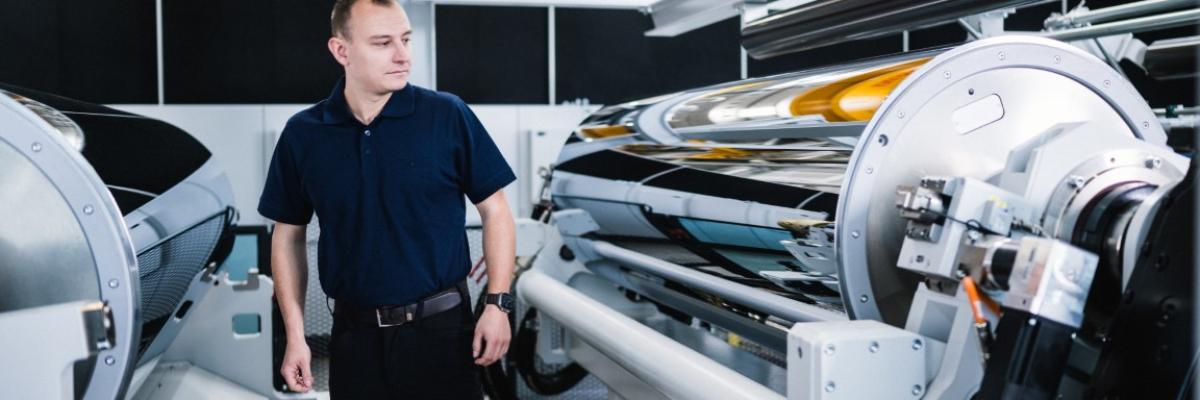
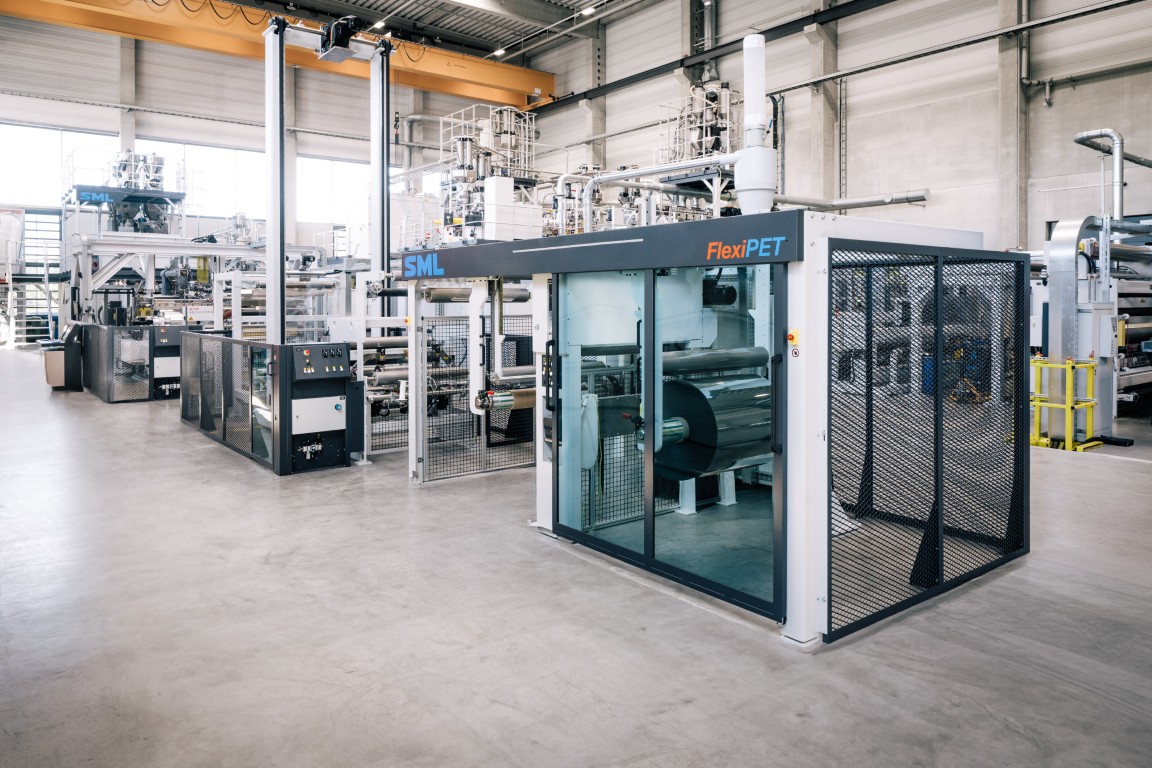
SML's new production-scale demonstration line FlexiPET for PET thermoforming sheet has gone into operation at the Technology Centre. The line brings together a completely redesigned machine architecture, SML's new in-house twin-screw extruder for polyester, a fully-automated roll stack, and a brand-new winder - all backed by a new safety concept. Early experience with all these innovations has been gathered – reason enough to take a closer look and ask about the challenges, the highlights, and what comes next. Martin Kastner, R&D Engineer at SML, tells the inside story.
Q: The machine concept has been completely redesigned. What drove that decision – and how is it holding up in practice?
Martin: When we started designing the line, our goal was pretty clear: maximum safety, but without making the machine harder to operate. So, we created safety areas – basically safety fences that group the machine components that belong together. The result is a concept that fully meets the European safety benchmark, the calender standard. Safety guards mounted directly on machine components, such as the roll stack itself, are no longer necessary. For our customers, that means one big practical benefit: the components are much easier to clean and maintain. The haul-off units are integrated into the safety areas with a very simple design, which also helps to reduce maintenance costs. And so far, the concept has proven itself in practice. In fact, it's set to become the standard for every line type in the sheet lines portfolio.
Q: The TSE80 – SML's in-house designed parallel twin-screw extruder – is being used in a PET sheet line for the very first time. How have the first experiences been so far?
Martin: The first tests are very promising. With the TSE80, the line can be started up quickly. Combined with SML's high-performance vacuum degassing, we can even process undried material, which enables very fast product and recipe changes. That's really what gives the line its flexibility, just as the name FlexiPET suggests. For customers, this translates directly into shorter changeover times and greater production flexibility. And the TSE80 also makes a big contribution to energy efficiency: we are down to just 0.27 kWh per kilogram.
Q: What's your personal highlight of the line?
Martin: For me, it's the newly developed automation solutions on the roll stack. They can deliver real added value to our customers. One of them is the automatic roll stack start-up process, which enables a safe line start-up in single-operator mode. The other is the software-based collision protection between the flat die and the polishing and cooling rolls of the roll stack.
Q: How does the automatic start-up process work exactly?
Martin: Let me walk you through it. First, the threading fleece – which protects the roll surface from scratches during start-up – is threaded through the roll stack. Then the operator activates the automatic start-up mode on the machine HMI. From there, everything happens on its own: the roll stack moves via servo positioning drives from its park position into the start-up position, the extruders start automatically, the roll gap closes in a defined way, and the roll drives kick in. The operator can simply wait at the exit of the roll stack safety area, take over the film, and pull it through to the winder. Defined contact-force and calendering-gap limits make sure that, during start-up, the rolls cannot be damaged by hard, crystallised plastic melt particles. For the customer, that means a safer, more comfortable start-up with fewer operators – and protection for the most valuable components of the line.
Q: What were the biggest challenges?
Martin: Without a doubt, developing the new W650 winder. The challenge was to build a new standard winder for thermoforming film that is very compact, offers efficient operability, delivers the highest winding quality – and still stays cost-attractive. We decided to develop it from scratch, with an interdisciplinary team spanning process engineering, technical design, and assembly. And thanks to the spirit of innovation and the excellent teamwork that SML stands for, we got it done. Now we can offer customers a winder that combines the best of both worlds: the user-friendliness and quick roll changes of a cantilever winder, combined with the large maximum winding diameters of up to 1,500 mm and roll weights of up to 2,000 kg that you would typically find in A-frame winders.
Q: Looking ahead – what are the next planned development activities?
Martin: The line is a true platform for development activities. Alongside customer trials, demonstration runs, and sample productions, our R&D work is focused on further improvements for operator comfort and maximising line availability. In the near future, for example, we will be installing and testing SML's in-house-developed edge trim and part roll cut with automatic positioning on the line. We are always open to trying new things together with our customers and partners.
Redlham, 12.11.2026